
A Small Appearance, A Big Memory from My Study Days in Brno
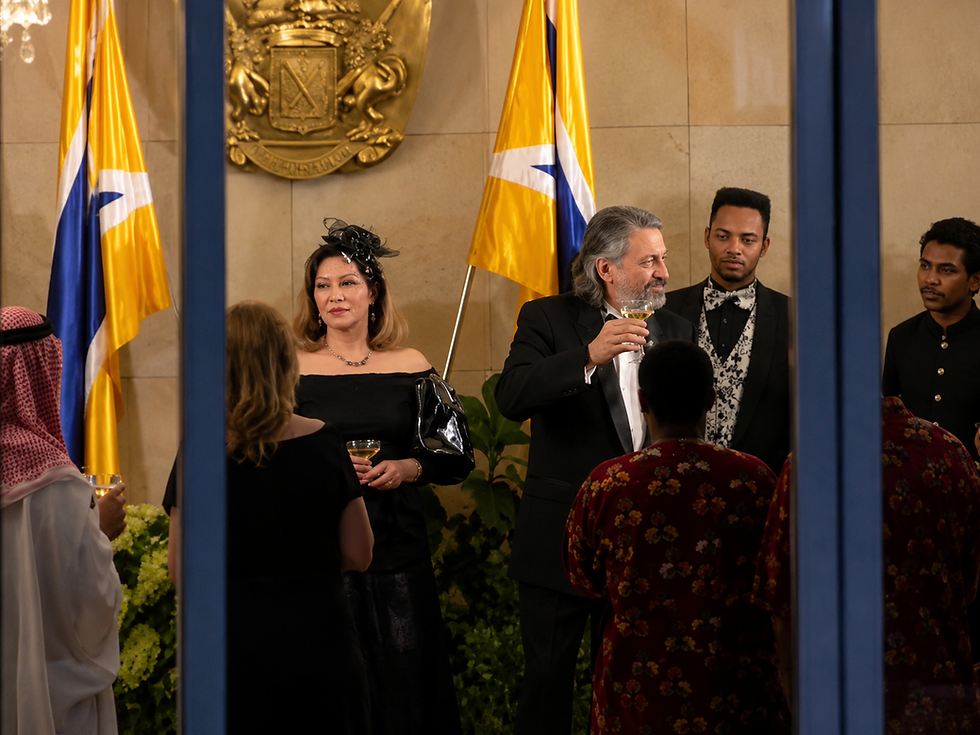
While researching the title of an old television film in which I had a small appearance during my student days, I remembered it in my mind as Velvyslancův poslední koktejl — “The Ambassador’s Last Cocktail.” Later, while searching and refreshing my memory, I found the Slovak TV film Posledný cocktail from 1993 in Youtube.
And then, while watching the film again after so many years, I saw myself in the background of a reception scene in the beginning of the telefilm.

That young man was me — Vijay Bakshi, around 23 years old, during my study days in Brno.
At that time, I was living near the shooting location, at Vinařská koleje, which many medical students from that period will remember very well. Life was simple, uncertain and full of learning. We were foreign students in a new environment, trying to understand the language, the people, the system and the culture around us.

The film also became memorable for me because it featured Milan Lasica, one of the most respected Slovak actors, humorists and cultural personalities of his generation. He played the ambassador, which also explains why I had remembered the film in my mind for years as something like Velvyslancův poslední koktejl. The director was Miloslav Luther, a Slovak film and television director known for serious literary and television adaptations. The shooting premises, as I remember them, were close to Vinařská koleje in Brno — a student area that was very familiar to many foreign and medical students of that time. So for me, the film was not only a screen appearance; it was connected with the streets, dormitory life and daily student atmosphere around Vinařská.
The shooting took place in 1993, in the very early period of the Czech-Slovak transformation. I was about 23, living near the location at Vinařská koleje in Brno, and I received what felt like a handsome honorarium for a young foreign student at that time.

For today’s generation, it may sound like a small thing. But in those days, for a student living in a hostel environment, that honorarium felt special. More than the money, the whole experience was exciting. There were lights, cameras, formal clothes, people waiting for their turns, and the feeling that we were part of something unusual.
There were no smartphones then. No selfies. No WhatsApp groups. No Instagram stories. If such a thing happened today, we would probably record everything, upload behind-the-scenes clips and share it immediately. But in those days, memories stayed mostly in the mind.
That is why seeing myself again after so many years was emotional.
I do not remember every detail of the shooting day, but I remember the feeling of that period. Brno was slowly becoming part of my life. Vinařská koleje was not only a place to sleep; it was a place where foreign students learned how to survive, adjust and grow.
We learned from each other, from local people, from tram journeys, from university canteens, from offices, from mistakes and from daily student life.
Every small experience became part of our education, even outside the classroom.
When I look at that old scene today, I do not see only a film appearance. I see my younger self — curious, hopeful and still discovering Europe. I see a time when everything was new: the language, the city, the culture, the winter, the bureaucracy, the friendships and the small challenges of everyday life.
For Indian students and expats who came later, the Czech Republic may already feel like a modern European country with online systems, Google Maps, digital payments, residence cards, social media groups and instant information. But for us in the early 1990s, life was very different.
Information was limited. You depended more on personal contacts, handwritten notes, local guidance and your own ability to adjust. There was more waiting, more uncertainty, but also more direct human contact.
The early 1990s were also a special period for this country. Czechoslovakia had recently changed, and the Czech Republic and Slovakia were beginning their separate journeys. As students, we did not always understand the full historical meaning of the changes around us, but we could feel that we were living in a time of transition.

Looking back today, I also realise how much the country around me changed after those student days. In 1993, everything still felt new and uncertain after the Czech-Slovak separation. Later, Czechia joined NATO, then the European Union, and finally the Schengen area. But when I was living near Vinařská koleje and taking part in that small television-film scene, all of that was still in the future. For me, the memory is not political; it is personal — a young foreign student watching a new country slowly take shape around him.
That small appearance in Posledný cocktail has now become a personal memory of my study days. It reminds me of Brno, Vinařská koleje, student life, youth, struggle, excitement and the beginning of my long connection with this country.
Many years later, that young Indian student in Brno became professionally connected with the same country in a different way. Today, I, Vijay Bakshi, work as a consultant in Czech visa, residence and immigration-related matters through ADAMEK CONSULTANT, with presence in Delhi and Prague. So when I look back at this small film appearance, I do not see only a student memory; I also see the beginning of a long personal and professional connection with Czechia.
Sometimes we do not know the value of a moment when it happens. Only many years later, when we see an old image, hear an old title, or recognise our younger self in a forgotten video frame, we realise that even a small moment had quietly become part of our life story.
For me, this film scene is exactly that — a small scene, but a big memory.
It is a memory of being young in Brno, of living close to Vinařská koleje, of receiving a student honorarium that felt important at that time, and of being part of a small television-film moment during a very special period of Czech-Slovak history.
More than anything, it is a reminder of how far life can travel from one simple student memory.
Author note: Vijay Bakshi, connected with Czechia since his student days in Brno, is a Czech visa and immigration consultant with ADAMEK CONSULTANT in Delhi and Prague.


Comments